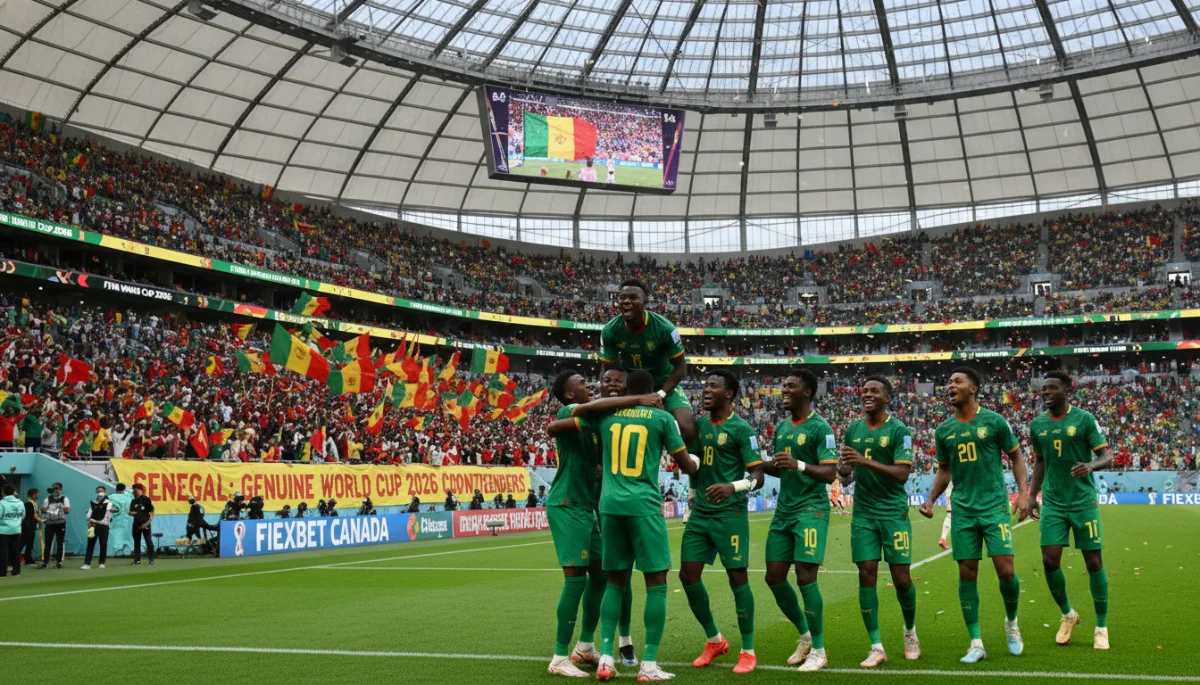
Senegal enters the 2026 World Cup conversation with real ambition, not the polite optimism usually reserved for outsiders. Head coach Pape Thiaw has made that point bluntly, insisting that if he ever stopped believing Senegal could win the tournament, he would walk away from the job. That kind of statement would once have sounded unrealistic, but Senegal’s recent rise has given it credibility.
The Lions of Teranga now look like one of the tournament’s most believable dark horses. Their squad blends proven veterans, fast-rising academy products, and carefully recruited dual nationals, creating a team that can compete with the best on a good day. That is why the Senegal World Cup 2026 prospects are drawing attention from supporters and bettors alike, including Canadians who can back the team through Rexbet Canada. The appeal is obvious: Senegal offers both upside and genuine pedigree.

What makes Senegal’s rise so compelling is that it is not a simple success story. The same system that has helped build a contender has also exposed deep imbalances in how value is created and shared. Senegal has become a factory for elite football talent, but the benefits of that production do not always stay close to home.
A Talent Pipeline Built for Europe
Senegal produces elite players at a remarkable rate for a country of about 20 million people. Much larger African nations often cannot match its output, and that is largely because of high-level academies such as Generation Foot, Diambars, and Dakar Sacre Coeur. These institutions provide coaching, schooling, and medical support that are good enough to prepare teenagers for Europe almost immediately.
The problem is that the pathway is tightly tied to European clubs, which often secure long-term access to the best prospects long before those players generate major income for local football. FC Metz’s relationship with Generation Foot is the clearest example. The French club has supported the academy for more than 20 years and has benefited from a steady flow of talent, including Sadio Mane, Ismaila Sarr, and Pape Matar Sarr.
From a footballing perspective, the model works. From an economic perspective, it is far less flattering. One recent review of 13 academy-trained Senegalese internationals found that their local academies received only about €100,000 in initial transfer income, while the same players were later sold on for a combined €81.2 million. Across their careers, those 13 players have generated more than €411 million in transfer fees. The scale of that gap explains why Senegalese football is often celebrated abroad while domestic clubs continue to struggle.
Local sides still fight for basic stability, stadiums remain underfunded, and the national league rarely gets the exposure it needs to grow. Even when solidarity payments are supposed to flow back to the clubs that helped shape a player, the system can break down. Administrative mistakes and delays have forced some teams to battle their own federation simply to recover money owed after major transfers, including Nicolas Jackson’s €37 million move to Chelsea.
Why the Diaspora Strategy Matters
Senegal has also become smarter and more aggressive in recruiting players from the diaspora. In the past, dual-national talents often chose Europe’s biggest national teams, leaving Senegal to regret what might have been. That pattern has changed because the federation now identifies promising players early and builds relationships before another country can lock them in.
Much of that work focuses on families in Western Europe whose children still feel a strong connection to Senegalese identity, even if they grew up elsewhere. The pitch is not only emotional. It is also competitive. Senegal can now offer a serious football project, a visible role for young players, and the chance to join a squad with real tournament ambitions. That combination has helped bring in names such as Ibrahim Mbaye of PSG and Chelsea defender Mamadou Sarr, both of whom previously represented France at youth level.
That approach gives Senegal a rare advantage: the team can draw from domestic academies and the diaspora at the same time. As a result, the squad can pair experienced leaders with teenagers who already have top-level technical training. It is not unusual to imagine Idrissa Gana Gueye, now 36, sharing the field with players still early in their careers. Few national teams can say the same.
The deeper question is whether Senegal can convert that talent into a historic run in North America. For stars such as Sadio Mane, Kalidou Koulibaly, and Edouard Mendy, the 2026 tournament may be the final major chance to leave a lasting mark on the world stage. That urgency matters. Golden generations do not last forever, and Senegal’s window is open now more than it has ever been.
The group draw will demand immediate sharpness. France, Norway, and Iraq make Group I a serious test, not a comfortable runway. The opening match against France in New Jersey will reveal a great deal about Senegal’s ceiling, especially under pressure. If the team survives that stage, its pace, discipline, and physical strength could make it dangerous in the knockout rounds. Senegal has assembled the ingredients of a contender, but the price of that progress remains part of the story.