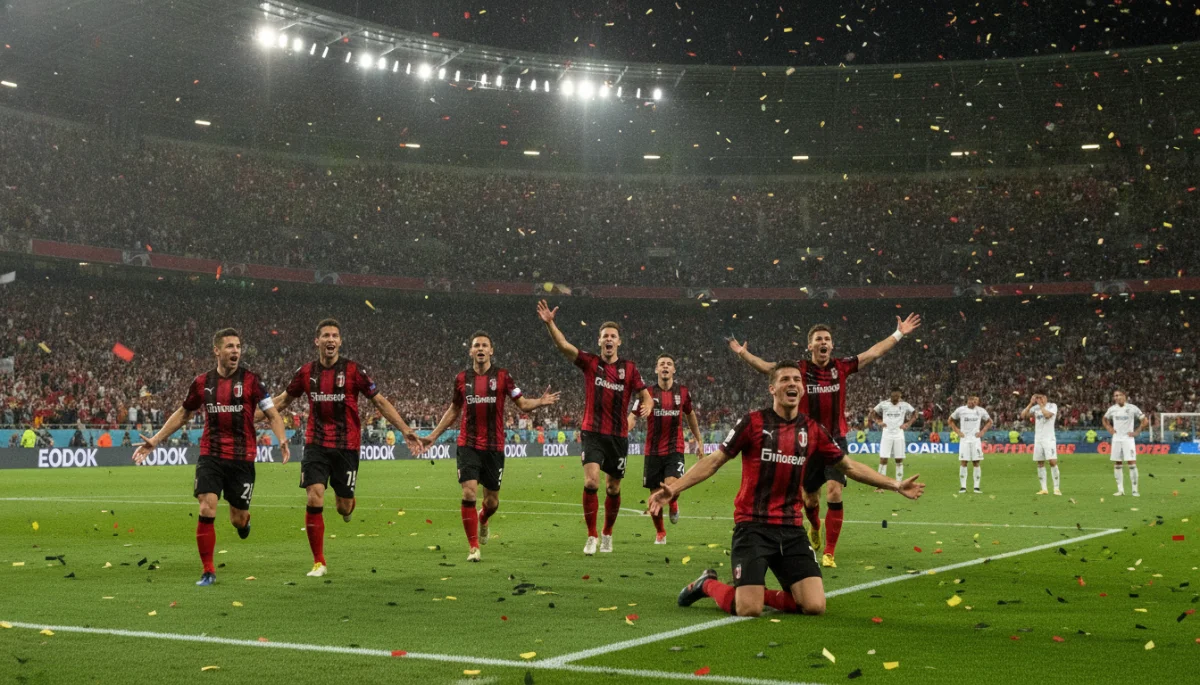
In a stunning display of offensive dominance, Belgium eliminated the United States from the 2026 FIFA World Cup with a ruthless 4-1 victory in the Round of 16, ending the host nation’s dream of a deep tournament run on their own soil.
The match, held at Seattle Stadium on Monday night, saw Belgium seize control immediately and expose critical defensive weaknesses in the American lineup. The United States, who had won their previous knockout match for the first time since 2002, faced a familiar and devastating opponent that had knocked them out in the same stage in 2014. The final scoreline of 4-1 mirrored the humiliation of a warmup match earlier in March where Belgium had also defeated the US 5-2, proving that the gap between the two teams was significant and unbridgeable on this night.
Charles De Ketelaere was the undeniable star of the contest, delivering a match to remember that secured Belgium’s place in the quarter-finals for the third consecutive World Cup. The Atalanta forward opened the scoring in the ninth minute, ghosting in to tap home a clever pass from Nicolas Raskin across the face of goal. His second goal arrived just 120 seconds after the US equalized, as he rose brilliantly to head home a Leandro Trossard cross from close range, completing his brace and restoring Belgium’s two-goal lead before halftime. De Ketelaere also orchestrated the third goal, poking possession away from an out-of-position Matt Freese to set up Hans Vanaken for an easy strike.
The USMNT managed a moment of hope when Malik Tillman’s deflected free kick restored parity out of nowhere, marking the Americans’ first shot of the contest. However, that parity lasted only 56 seconds before Belgium reasserted their dominance. The second half unraveled through self-inflicted errors, including a costly mistake by goalkeeper Matt Freese who dawdled with the ball outside his own penalty box, leading directly to the third goal. Romelu Lukaku sealed the emphatic result with a clinical strike in stoppage time, further extending his standing as the all-time top scorer for the Red Devils.
To understand the magnitude of Belgium’s performance, the following table compares key statistical metrics between the two teams:
| Statistic | Belgium | United States |
|---|---|---|
| Final Score | 4 | 1 |
| Expected Goals (xG) | 2.15 | 0.67 |
| Shots on Goal | Multiple | 1 |
| Tournament Stage Reached | Quarterfinals | Eliminated (Round of 16) |
The statistics clearly show that Belgium outperformed their opponents significantly, with an expected goals total more than three times higher than that of the US. This disparity highlighted the Red Devils’ ability to create high-quality chances while the Americans offered very little in the proceeding phases of the game beyond a single deflected shot.
Beyond the tactical battle, the match was overshadowed by a controversial red-card saga involving Folarin Balogun. The controversy centered on FIFA’s decision to suspend Balogun’s one-game ban following a red card in the Round of 32, a move that sparked accusations of interference by US President Donald Trump, who admitted asking FIFA president Gianni Infantino to review the suspension. Balogun was allowed to start the match, and Belgium answered on the field with a ferocious performance that seemed fueled by the overturned suspension. As one account noted, if a team needs extra motivation for a World Cup match, they have already lost, yet the Red Devils proved that external factors can indeed galvanize a winner.
For the United States, the loss represented a familiar heartbreak. Despite Mauricio Pochettino’s side managing a small consolation by finally winning a knockout match at the World Cup for the first time since 2002 in the previous round, bowing out at the same stage as four years ago was a bitter pill. Many US players were in tears after the final whistle, and Christian Pulisic’s night ended early as he was forced off with an ankle injury in the second half. The red-card saga and the humiliating defeat added layers of frustration to a tournament that ended in calamity for the hosts.
Belgium now faces a daunting date with Spain in the quarterfinals. The reward for their statement win is anything but gentle, as they travel to Los Angeles Stadium in four days to face a team that offers relentless possession and control rather than the errors the US provided. The Red Devils, playing without fear under Rudi Garcia, have shown that their willingness to make bold calls, such as benching Kevin De Bruyne and Jérémy Doku, can be vindicated. With De Ketelaere in the form of the tournament and Lukaku as a finisher rewriting national records, Belgium has the firepower to hurt anyone.
However, the defensive questions that Belgium papered over against a sloppy US side will face a harsher examination against Spain. The Spanish midfield will dominate the ball, forcing Belgium to spend long stretches chasing it and defending deep. Discipline at the back and clinical efficiency in transition will likely decide whether this run continues. For a Belgian generation that has carried the “golden” label for years without a major trophy, a quarterfinal against Spain is exactly the kind of test that separates a good tournament from a memorable one. Win it, and talk of a genuine deep run becomes serious.
The night in Seattle ended with the United States’ hopes for a deep World Cup run at home extinguished by a team that exposed their defensive liabilities without mercy. As Belgium advances to take on Spain, the USMNT’s tournament comes to a definitive end in the round of 16, leaving a legacy of heartbreak and unanswered questions for a nation that hoped to host a victorious campaign.
- Belgium dominated early with an xG of 2.15 compared to the US’s 0.67.
- Charles De Ketelaere scored twice and assisted on a third goal.
- The US equalized briefly via a deflected free kick by Malik Tillman.
- Defensive errors by Matt Freese led to two additional Belgian goals.
- Romelu Lukaku sealed the 4-1 win with a stoppage-time goal.
- Belgium will now face Spain in the quarterfinals at Los Angeles Stadium.
This comprehensive analysis of the match confirms that Belgium’s victory was not just a fluke but a result of superior tactical execution, individual brilliance, and a psychological edge that the United States could not overcome on the biggest stage in world soccer.