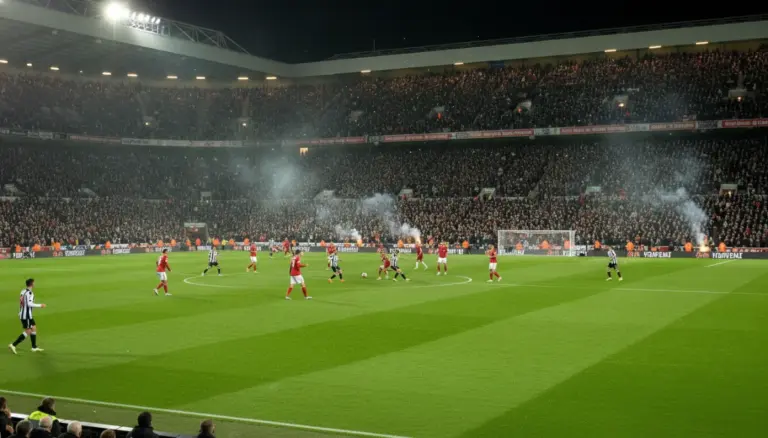

Arsenal’s long journey back to continental football’s grandest stage concluded on Tuesday evening at the Emirates. Bukayo Saka’s decisive finish in the first half propelled Mikel Arteta’s squad past Atlético Madrid with a 1-0 victory, securing a 2-1 aggregate triumph and booking a spot in the Champions League final for only the second time in the club’s existence. The Spanish side, managed by Diego Simeone, offered stern resistance throughout both legs but ultimately fell short when opportunities mattered most.
The showdown in Budapest on May 30 will pit Arsenal against either Paris Saint-Germain or Bayern Munich—two heavyweight opponents representing distinctly different tactical challenges. Yet before considering what awaits, understanding how this semifinal was won requires examining the mechanics of Arteta’s approach: the positioning that allowed Saka to pounce, the structural vulnerabilities that eventually cracked Atlético’s organized defense, and the historical defensive standards that have underpinned this entire European campaign.
The Breakthrough Moment and What It Reveals
Forty-five minutes had elapsed when Arsenal found their opening. The sequence unfolded with deceptive simplicity. Viktor Gyökeres, Arsenal’s forward, drove toward the byline where Atlético’s defensive shape offered minimal resistance. His pullback found Leandro Trossard, who adjusted onto his right foot and sent a low delivery toward the six-yard box. Jan Oblak, the Madrid goalkeeper, could only parry the effort into traffic. Saka, positioned precisely where instinct and anticipation placed him, reacted faster than any defender and converted the rebound into the net.
The goal itself lacked aesthetic refinement—no skill, no improvisation, merely the reward for positional discipline. Yet this represents Saka’s particular strength. Against Fulham in the previous round, he had similarly demonstrated an ability to finish when chances presented themselves in congested areas. His recent form suggests he has rediscovered confidence after navigating an extended period battling both physical concerns and inconsistent performances. For Arsenal moving forward, his willingness to occupy dangerous spaces near the opposition goal cannot be overstated.
Arteta’s management of Saka throughout the tie deserves recognition as well. Recognizing the physical demands of a Champions League semifinal, the manager withdrew his attacker around the hour mark, preserving his fitness for the potentially more challenging phases ahead. Strategic substitution timing often receives less attention than tactical innovation, yet it frequently proves decisive in knockout football.
Defensive Resilience Across Two Legs
The numbers tell an extraordinary story about Arsenal’s defensive performance this season:
| Defensive Metric | Arsenal Record | Historical Context |
|---|---|---|
| Goals Conceded (14 matches) | 6 goals | Exceptional efficiency |
| Clean Sheets | 9 sheets | Third-best in Champions League history |
| Nearest Comparison | Real Madrid 2015-16, Arsenal 2005-06 | Both reached final stage |
Gabriel Magalhães and William Saliba form the defensive partnership upon which this entire structure rests. Both players have demonstrated the reading of play and positioning that separates competent defenders from exceptional ones. In the sixth minute following Arsenal’s goal, Gabriel executed a perfectly timed challenge against Giuliano Simeone that exemplified his contribution. Saliba’s work recognizing second-ball situations when Atlético shifted toward longer passes in the second period proved equally influential.
These statistical accomplishments cannot be dismissed as luck or favorable matchups. Arsenal has faced legitimate attacking threats throughout their European journey. The defensive organization has consistently neutralized even dangerous opponents. This consistency provides confidence heading into Budapest, regardless of which opponent awaits in the final.
Atlético’s Tactical Plan and Its Execution
Diego Simeone entered the evening with a strategy that has served his teams well throughout his tenure: compact defensive organization, limited space in central areas, and emphasis on quick counterattacking transitions. For approximately forty-three minutes, this framework held firm. Arsenal registered no shots on target during this opening period. Atlético created presentable opportunities through Julián Álvarez and Griezmann, with the latter forcing David Raya into a meaningful save.
The vulnerability that ultimately exposed Madrid’s approach centered on the flanks, specifically along the byline where Arsenal’s attackers found space to operate. Gyökeres’s ability to attack deeper areas and pull back dangerous crosses proved particularly problematic. While the Swedish striker has not quite reached the thirty-goal threshold some anticipated upon his arrival, his off-ball movement and work in buildup sequences has become instrumental to Arsenal’s attacking function.
Simeone’s in-game management deserves examination as well. With Atlético trailing and time slipping away, the manager withdrew both Griezmann and Álvarez—two of his most experienced attacking threats—in favor of fresher legs. This gambit, though bold, failed to generate the breakthrough opportunity needed. Alexander Sørloth, positioned as a replacement, missed a presentable chance with five minutes remaining, rendering Simeone’s tactical adjustment ultimately fruitless.
This represents the second Champions League final that has eluded Simeone’s Atlético sides during his managerial reign. Previous defeats came in 2014 and 2016, both against dominant Real Madrid squads. The window for another opportunity may not arrive in the near future, adding poignancy to Tuesday’s departure.
The Griezmann Factor and Atlético’s Missed Moments
Antoine Griezmann offered everything that experience and work rate could provide across sixty-six minutes. Four tackles, eight duels contested, and two ball recoveries occupied his evening. He initiated the sequence that created Álvarez’s opening-half opportunity and orchestrated the pullback that forced Raya into a save minutes later. In the second half, with his team requiring goals, Griezmann’s shot demanded a save before he appeared to suffer contact from Riccardo Calafiori that Atlético believed warranted a penalty award. The referees disagreed.
Griezmann’s exit suggested Simeone’s belief that his team required different tactical tools to break Arsenal’s defensive organization. Whether this substitution represented a turning point or merely accelerated an inevitable conclusion remains debatable. What remains certain is that Atlético never found the cutting edge required to equalize after falling behind.
Implications for Arteta and Arsenal’s European Ambitions
Speculation surrounding Arteta’s contract status has occasionally overshadowed his genuine accomplishments at the club. With twelve months remaining on his current agreement and no major trophy secured since his arrival in 2019, questions naturally arise about his long-term future. Tuesday’s achievement should substantially quiet those conversations.
Reaching back-to-back Champions League semifinals under the modern competition format represents an accomplishment of considerable magnitude. Many elite clubs fail to achieve this consistency over comparable periods. Navigating the quarterfinal and semifinal stages of European football’s most prestigious competition, then ultimately advancing to the final stage, distinguishes Arteta’s tenure from previous eras of Arsenal football.
The implications of Budapest break down simply. Victory against PSG or Bayern Munich would fundamentally reshape conversations about Arteta’s management and Arsenal’s trajectory. Defeat would not erase the substantial foundations already constructed across two seasons of European football. Either outcome sees Arteta join a select group of Arsenal managers—only one predecessor achieved what he has already accomplished.
Forward Momentum and Historical Context
The last Arsenal team to reach a Champions League final did so in 2006 when Sol Campbell’s header against Barcelona at the Stade de France secured their sole appearance in this competition’s championship match. Twenty years represents an extended absence from football’s most exclusive stage. The supporters who gathered outside the Emirates on Tuesday understood the weight of this return.
Arsenal has constructed something meaningful across their European campaign this season. The defensive stability, the tactical coherence, and the mental fortitude required to navigate multiple knockout stages have all been tested and proven sufficient. Whether Budapest produces ultimate triumph or falls short of that achievement, the trajectory has already been firmly established.
Saka’s instinctive finish, Gyökeres’s work along the flanks, Gabriel and Saliba’s defensive organization, and the collective commitment to structure and discipline combined to end Arsenal’s two-decade wait for another appearance in European football’s showpiece event. Regardless of what follows, that accomplishment stands.