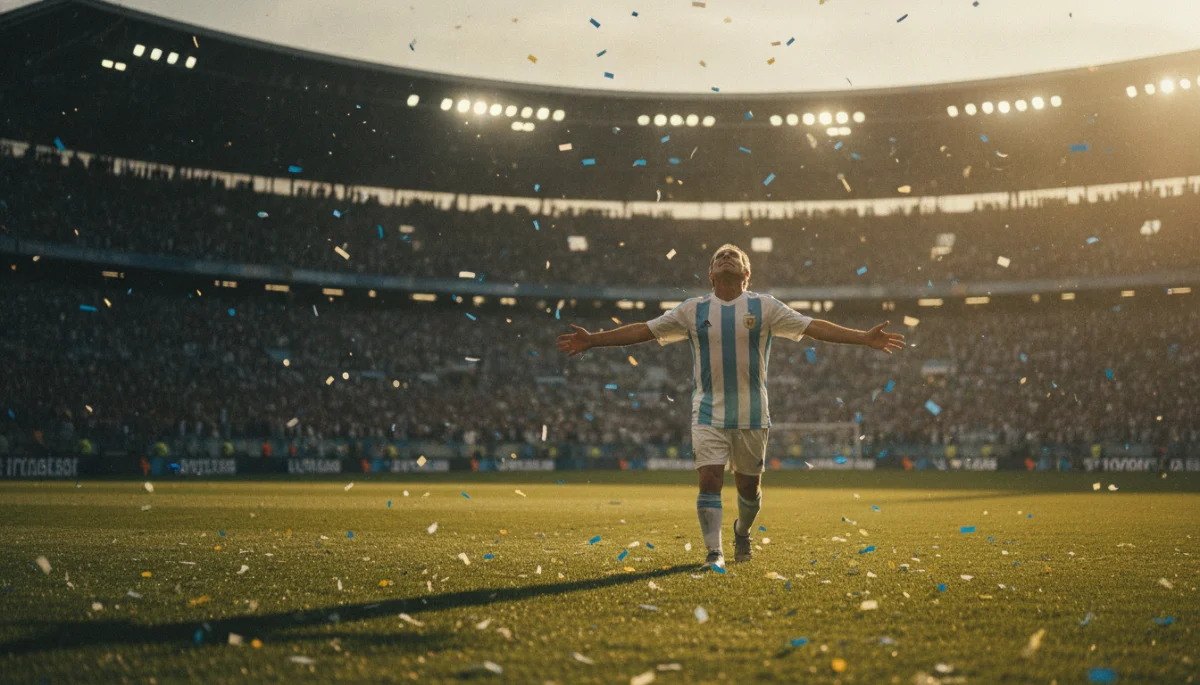
In the rare moments when statistics transform from cold numbers into living poetry, the world stops to watch. Lionel Messi reached that extraordinary threshold last Monday in Arlington, Texas, and the entire globe turned its attention to the pitch.
With a perfectly curved left-foot finish in the 38th minute against Austria, followed by a gritty, determined rebound goal deep in stoppage time, Messi became the all-time leading scorer in FIFA World Cup history. This record now stands not just among men, but among every player in history. His 17th and 18th tournament goals pushed him past Germany legend Miroslav Klose, past Brazil’s women’s icon Marta, and into territory no male or female player has ever occupied before.
He is 38 years old. He is achieving this right now.
From Hat-Trick Glory to Historic Record
The record-breaking journey began before most fans had settled into their World Cup viewing routines. In Argentina’s tournament opener against Algeria on June 16, Messi delivered a hat-trick—his first ever at a World Cup—to tie Klose’s long-standing record of 16 goals. At 38 years and 357 days old, Messi became the oldest player to score a hat-trick in World Cup history, surpassing Cristiano Ronaldo, who was 33 when he scored three goals against Spain in 2018.
Just six days later against Austria, he repeated the feat. Messi entered that match with 16 goals and missed a penalty in the ninth minute, briefly denying him the outright record. Yet that miss only made what followed more dramatic. He curled home from a cutback in the 38th minute, then added a late second in the 2-0 victory, bringing his all-time total to 18.
Five goals in two games. Eighteen goals across six World Cups. The record belongs to him.
Understanding the Scale of Achievement
To grasp the magnitude of what Messi has accomplished, consider the career that led to this moment. He scored his first World Cup goal on June 16, 2006, at age 18 against Serbia and Montenegro. Twenty years later, he continues breaking records as the first player to appear in six different editions of a men’s World Cup.
Key milestones of his historic run include:
- Second man in World Cup history to score four or more goals in three different tournament editions, after Miroslav Klose (2002, 2006, 2010)
- Only men to score four or more goals in a single World Cup at age 38 or older, joining Roger Milla
- First player to miss penalties in three different World Cups, yet respond with two decisive goals against Austria
- Record 28 matches played across six tournaments, rewriting World Cup longevity
His teammates have run out of words. “If anyone thought this group was better off without Leo,” said midfielder Alexis Mac Allister after the Austria win, “today it became clear that Leo is the most important of them all.”
The Mbappé Challenge
The record may not remain safe for long. Kylian Mbappé now has 16 career World Cup goals, sitting second all-time behind only Messi’s 18. The French captain remains very much in this tournament, and with France appearing as genuine contenders, the gap could narrow quickly.
But for now, Messi leads, and the question is how many more he can add before his final World Cup concludes.
If you want to witness history unfold, watch tonight’s Argentina vs. Jordan match at 10 p.m. ET on TSN. Messi will almost certainly be on the pitch. If recent form is any guide, history may be made again.
Why This Matters for Soccer Fans
Beyond the spectacle, there is a practical reason for soccer fans to pay close attention to Messi’s form: Argentina represents potential opponents deep in this tournament. The defending world champions have won all their group matches, conceded zero goals, and look every bit like the team to beat.
If any nation navigates their way through the round of 32 and beyond, Messi and Argentina could be waiting. Understanding what they are facing—a 38-year-old playing the soccer of his life, surrounded by a squad of world-class talent—is not just interesting. It is essential.
Watch the match tonight. Messi will almost certainly be on the pitch. If recent form is any guide, history may be made again.
For more details on all of Lionel Messi’s 17 World Cup goals as he breaks Miroslav Klose’s individual scoring record, visit BBC Sport.