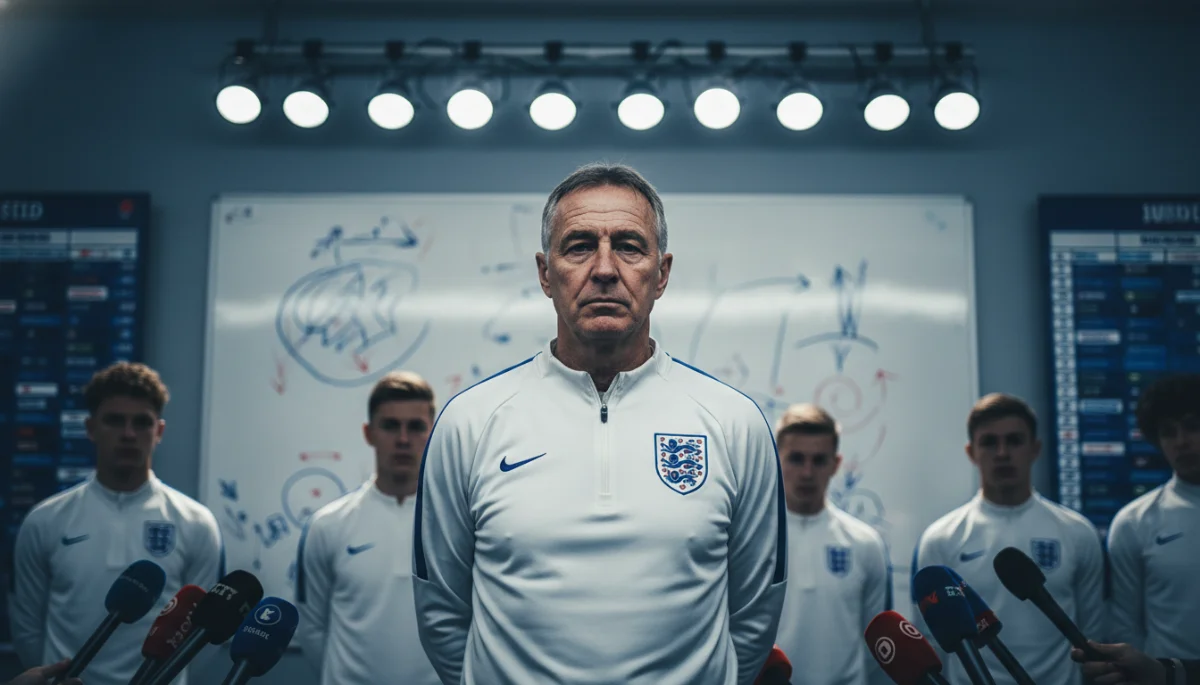
Thomas Tuchel’s final World Cup squad for England did not just confirm expectations; it also created one of the most debated choices of the summer. Jordan Henderson’s inclusion stands out because it arrives at a moment when several more glamorous midfield names were left on the outside looking in. Cole Palmer, Phil Foden, Adam Wharton, and Morgan Gibbs-White all missed the cut, yet Henderson, now 35 and short on recent club minutes, was still trusted for the tournament. That decision tells a clear story about what Tuchel values most.
The midfield race was brutally crowded
England’s central midfield pool was packed long before the squad was announced. Declan Rice and Jude Bellingham were always going to be central to the plan, while Elliot Anderson forced his way into the conversation with a relentless run of high-energy displays. On top of that, younger attacking talents such as Morgan Rogers, Eberechi Eze, and Kobbie Mainoo all had arguments for inclusion.
Henderson did not fit the same profile as any of them. He was never likely to provide the kind of highlight-reel moment that changes a match on its own. His season has also been interrupted by injuries and rotation, leaving him with only four full 90-minute appearances for Brentford since January. If selection were based only on form and match rhythm, his name would have been easy to question. But international tournaments are rarely decided on numbers alone.
- Rice and Bellingham bring star quality and balance.
- Anderson adds pressing, stamina, and control.
- Rogers, Eze, and Mainoo offer different attacking solutions.
- Henderson offers experience, structure, and leadership.
Why Tuchel trusted Henderson anyway
The strongest argument for Henderson has little to do with goals, assists, or flashy technical numbers. Tuchel appears to have chosen him for the influence he can bring to the dressing room and the standards he can help maintain over a long tournament. In a squad with many younger players, that kind of presence matters more than it would in a group already filled with battle-tested veterans.
There is also the history attached to his call-up. Henderson turns 36 on England’s opening day against Croatia, and if he plays, he could become the first footballer to appear at seven major tournaments and at four separate World Cups. That is the sort of milestone that underlines how much trust he has earned over time. For a coach trying to steady a young squad before knockout football begins, having someone who has seen almost every version of international pressure can be a real advantage.
Tuchel could have gone for a more creative passer or a midfielder with a sharper final ball. Instead, he seems to have prioritized calm, professionalism, and a player who understands how to keep a group aligned when expectations rise.
What Henderson actually does on the field
Henderson’s role is unlikely to grab headlines, but it is often essential. At Brentford, much of his work has been about supporting the team’s shape rather than dominating the ball. He drops deeper to help the defense, keeps possession moving, and makes selfless runs that open space for others.
That pattern shows up in his movement data as well. He frequently shifts toward the ball to provide a passing outlet, advances to support attacks, and makes overlap-style runs that can drag defenders away from their marks. In other words, he is often solving problems before the rest of the crowd even notices one exists.
A match against Manchester United offered a good example. Henderson checked into space to receive from Sepp van den Berg, which allowed Yehor Yarmolyuk and Mikkel Damsgaard to push higher up the pitch. Instead of forcing Van den Berg into a risky forward pass, Henderson handled the progression himself and then found Damsgaard with a line-breaking ball to launch the move.
He has also shown that he can help England stretch the field vertically. Against Manchester United and Chelsea, he produced two assists by reading a broken play, collecting the loose ball, and immediately lifting a pass over the defense for runners to chase. It is not always spectacular, but it is the kind of quick-thinking contribution that can matter in a tight tournament match.
How he fits the squad puzzle
There is a tactical logic here as well. England’s midfield group contains multiple roles, but Henderson occupies a lane that none of the others quite duplicate. According to role-based analysis built from Opta and SkillCorner data, he functions as a deep-lying channel-ball progressor, someone who helps control tempo from the right side of midfield and moves the ball into better areas with range and patience.
That uniqueness does not erase the case for the players who missed out. Palmer and Foden would have added more obvious creativity. Wharton would have brought anchoring and crisp forward passing. Even Rice, though classified differently, can drift into similar territory when needed. Still, Tuchel seems comfortable with overlap in some areas if it means preserving a specific kind of experience in another.
For England, the choice may come down to trust. Henderson is not the most exciting option, but he may be one of the safest. In a tournament where a single bad half can end a campaign, that counts for a lot.
Tuchel did not pick Henderson because he is the flashiest midfielder available. He picked him because some squads need a steadying voice as much as they need a spark.
That is why this selection feels so revealing. Henderson’s place in England’s World Cup squad is less about current headlines and more about the value of control, intelligence, and emotional balance. Tuchel clearly believes those traits can still shape important matches, even if they arrive without much noise.