The Scoreless Truth Behind Boston’s Night
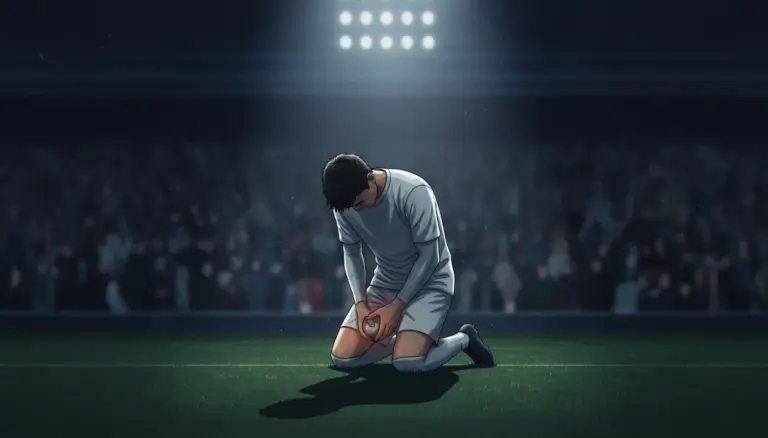
Ghana and England ended in a 0-0 draw on June 23, 2026, at Boston Stadium, a result that stunned many after England’s dominant win over Croatia. Ghana, ranked 73th globally, denied England—the tournament favorites and Croatia’s four-goal conquerors—any goal across 90 minutes of intense play. The match lacked fireworks but delivered a powerful statement of defensive resilience from Ghana. This was not just a draw; it was a declaration that the Black Stars could outmaneuver the world’s best. The silence that fell over Boston Stadium mirrored the tension of a giant that refused to fall yet never roared. England, with 72% possession and 19 shots, controlled the game statistically but failed to convert any attempt into a goal. Ghana, with only two shots and none on target, executed a flawless defensive strategy that left England frustrated and searching for answers. Harry Kane missed England’s best chance when he skied a late close-range volley with the goal gaping, a moment that will haunt England fans for days.
How Queiroz’s Tactics Crushed England’s Hopes
Carlos Queiroz, appointed Ghana’s coach just months before the tournament, implemented a plan that turned conservatism into a superpower. His team adopted a compact 4-5-1 shape without the ball, with Antoine Semenyo and Thomas-Asante dropping into midfield to block passing lanes and suffocate England’s build-up play. This trap was set before kick-off, and England walked straight into it, struggling for extended periods to break through Ghana’s low block. Queiroz’s philosophy was clear: sit deep and exploit counterattacks. When asked if facing England was daunting, he responded philosophically, stating that players are fully motivated when playing against teams like England, France, or Germany. His tactical genius blended with beautiful simplicity, creating a game plan that prioritized collective discipline over chaotic individual brilliance.
England’s 19 Shots vs. Ghana’s 2: A Statistical Breakdown
The match stats reveal a stark contrast between England’s dominance in possession and Ghana’s efficiency in defense. England dominated with 72% possession and launched 19 attempts at goal, yet none were converted. Ghana, with only two shots and none on target, maintained a low block that held firm throughout the match. This statistical disparity highlights England’s frustration and Ghana’s defensive mastery.
| Team | Possession | Shots | Shots on Target | Goals |
|---|---|---|---|---|
| England | 72% | 19 | 0 | 0 |
| Ghana | 28% | 2 | 0 | 0 |
Thomas Tuchel’s stilted side struggled for extended periods, only starting to threaten late in the second half. Nico O’Reilly hit the crossbar, and Marc Guehi had a header cleared off the line in stoppage time. These missed opportunities underscore England’s inability to capitalize on their dominance, leaving them frustrated and searching for answers.
Queiroz’s Masterclass and Yirenkyi’s Rising Star
Carlos Queiroz’s appointment as Ghana’s coach was met with nervousness due to his reputation for caution. However, against England, his conservative approach became a superpower. His game plan was clear from the outset: sit deep and look to pick England off on counterattacks. This strategy allowed Ghana to frustrate England throughout the match, showcasing their solid organization and discipline. Caleb Yirenkyi, a 20-year-old midfielder, emerged as a key figure in Ghana’s tournament. He scored the winner against Panama and is attracting admiration from top European clubs. Yirenkyi plays for FC Nordsjælland in Denmark, where he is coached by Michael Essien, and comparisons to the Ghana legend are being made freely. Against England, Yirenkyi operated on a yellow card tightrope after an early booking but did not buckle, serving as the heartbeat of this Ghana side.
Group L Standings and Ghana’s Path to Knockouts
The 0-0 draw created a tense situation in Group L, with both England and Ghana sitting on 4 points, level at the top of the group. Croatia and Panama have played only one match so far, with both teams on 0 points. If Croatia defeats Panama, they climb to 3 points and set up a final-day showdown with Ghana that will decide who goes through.
| Team | P | W | D | L | Pts |
|---|---|---|---|---|---|
| England | 2 | 1 | 1 | 0 | 4 |
| Ghana | 2 | 1 | 1 | 0 | 4 |
| Croatia | 1 | 0 | 0 | 1 | 0 |
| Panama | 1 | 0 | 0 | 1 | 0 |
Ghana faces Croatia in Philadelphia on June 27, a match that could define their entire campaign. A win would almost certainly secure their spot in the knockouts, while a loss could complicate their path. This victory would confirm Ghana’s spot in the knockouts for the first time since their memorable quarterfinal run at the 2010 World Cup in South Africa, a tournament remembered for Luis Suárez’s handball and the heartbreak that followed.
Africa’s Quiet Contender and the Bigger Picture
Ghana arrived in America under the radar, missing Mohammed Kudus and facing off-field complications for Thomas Partey. Yet, they remain unbeaten with 4 points, sitting joint-top of their group alongside England. With a point from their remaining game, the Black Stars would almost certainly reach their first knockout round in over a decade. A win, and they go through in style. The Black Stars have always carried a certain electricity—the drama of 2010, the heartbreak, the personality. This 2026 squad may lack the celebrity of earlier generations but has rediscovered collective discipline, belief, and a coach willing to bet on organization over chaos. England looked at Ghana across that Boston pitch for 90 minutes and couldn’t find a way through. If you’re Croatia, that’s not a comforting thought. The Black Stars are very much alive, and Philadelphia awaits. For more on the match, visit CBS Sports. To explore Ghana’s scouting report, see ESPN. For updated standings, check BolaVIP. To review the full fixture schedule, visit ESPN Fixtures. For prediction details, see Al Jazeera.