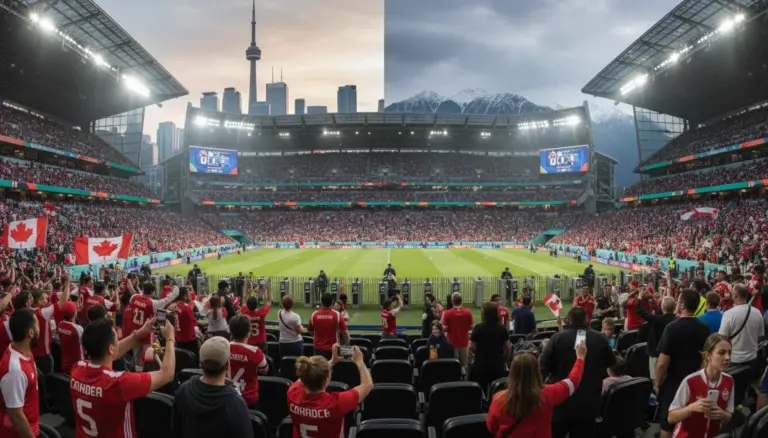
The 2026 FIFA World Cup begins with an unmistakably Canadian statement, as the country stages its first home opening celebration for the tournament. With Canada joining the United States and Mexico in a shared launch, the event turns a global sporting milestone into a three-nation production that stretches from June 11 to the final in New York on July 19.
For Canadian supporters, the significance goes far beyond the first whistle. The United States has already welcomed the World Cup once, and Mexico has done so twice, but Canada is stepping into that role for the first time while the tournament expands to a record 104 matches across 16 host cities. One of the most symbolic moments will take place in Toronto, where the national atmosphere is expected to be as important as the football itself.
Toronto Takes Center Stage
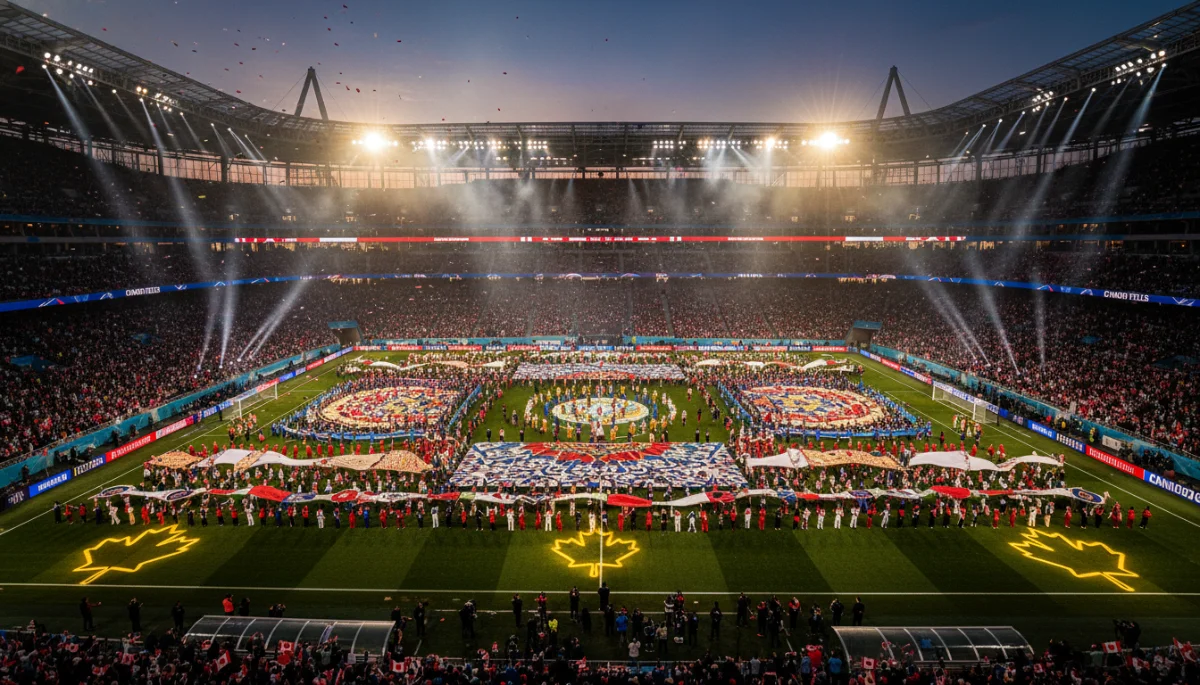
The Canadian ceremony is set for June 12 at Toronto Stadium, beginning at 1:30 p.m. local time, or 17:30 GMT. The production is built around the idea of a cultural mosaic, a theme meant to reflect the country’s layered identity through music, performance, and visual storytelling. The show is expected to last about 13 minutes and open with a countdown that frames the occasion as a journey from coast to coast to coast.
The performance lineup leans heavily on Canadian talent, with appearances expected from Alanis Morissette, Alessia Cara, Jessie Reyez, Michael Bublé, and William Prince. They are joined by Elyanna, Nora Fatehi, Sanjoy, and Vegedream, creating a mix designed to match the broad, multicultural tone of the event.
FIFA President Gianni Infantino described the ceremony as a powerful reflection of Canada’s identity, calling it a moment of pride, unity, and anticipation as the country enters a new chapter on the world stage.
A Home Soil Debut That Matters
The ceremony is only the beginning of a day that Canadian fans have long imagined. Soon after the celebration ends, Canada’s men’s national team will face Bosnia and Herzegovina, marking the first time the side has ever played a World Cup match on home soil. Kickoff is scheduled for 3 p.m. local time, or 19:00 GMT, after the usual warm-ups and formal introductions.
That match gives the event its emotional weight. It is not only a tournament opener for the host nation, but also a public arrival for a program that has steadily raised expectations in recent years. Toronto’s crowd is expected to respond with the kind of noise and energy that can turn a sporting occasion into a civic memory.
How The Three Openings Connect
The Canadian presentation is one part of a coordinated opening stretch across all three host nations. Each ceremony is tied together by the broader idea that football can connect people across borders, while still allowing each country to express its own character. The productions are led by Marco Balich, whose work has shaped several Olympic opening ceremonies.
Canada’s version emphasizes diversity through the cultural mosaic concept, Mexico’s centers on the traditional paper art of papel picado, and the United States is represented through what Balich described as a super shiny, glowing cup. Each ceremony begins 90 minutes before its nation’s first match, giving the opening weekend a carefully synchronized rhythm.
The tournament starts a day earlier in Mexico City, where the opening ceremony takes place at Mexico City Stadium, formerly Estadio Azteca, before Mexico plays South Africa. That show is the longest of the three, running about 16 and a half minutes, and it will feature Indigenous performers, folkloric elements, and a major musical roster that includes Shakira, Alejandro Fernández, J Balvin, Maná, and Tyla. Authorities have also declared June 11 a public holiday in the capital, with schools closed and remote work encouraged.
Later on June 12, the United States hosts its own celebration at Los Angeles Stadium before meeting Paraguay. The American event brings together Katy Perry, Future, Anitta, LISA, Rema, and Tyla, extending the opening day into another high-profile show.
What Viewers In Canada Need To Know
Canadian audiences can follow the ceremonies and matches on CTV and TSN, with French-language coverage on RDS. In the United States, coverage airs on FOX and FS1, with free streaming available through Tubi, while viewers in the United Kingdom can watch through the BBC and ITV.
That accessibility matters because the opening stretch is spread across three countries and two days, creating a rare shared viewing experience. Mexico gets the first celebration on June 11, then Canada and the United States carry the event forward on June 12, giving fans a nearly continuous run of opening-day energy.
- Mexico launches the World Cup opening celebrations on June 11.
- Canada follows on June 12 with a Toronto ceremony and a historic home match.
- The United States closes the first wave of festivities later that same day in Los Angeles.
A City Preparing For A Global Surge
Toronto is preparing for a heavy arrival of visitors, with organizers adding transit service and coordinating crowd-flow plans around the stadium. Security and logistics have become major priorities across all three host nations, especially as the tournament begins under intense international attention.
Conditions have not been entirely smooth elsewhere. In Mexico City, teacher-union protests have raised concerns about road disruptions near the stadium, though authorities say the opening ceremony remains secure and have placed a large security operation in place. In Los Angeles, officials have focused on managing crowds and have said they do not expect immigration enforcement at World Cup venues.
A Defining Moment For Canadian Soccer
For Canada, June 12 is more than a date on the calendar. It is a public debut in front of the world, a chance to celebrate the country’s diversity while introducing its team to the biggest stage in sport at home. The ceremony in Toronto is designed to mirror the scene in the stands, where the crowd itself becomes part of the story.
With the World Cup continuing through July 19, the opening in Canada carries the feeling of a long-awaited beginning. The tournament has arrived, and Toronto is set to help give it a start that feels both national and historic.