The 2026 FIFA World Cup arrives with more teams, more matches, and more pressure than any edition before it, and the title race already looks crowded. With Canada, Mexico, and the United States sharing the stage, the tournament will test depth, discipline, and stamina as much as pure talent.
For Canadian fans, the emotional center of the event is obvious: cheer for Les Rouges, enjoy the home-soil atmosphere, and then keep one eye on the global heavyweights that are most likely to control the bracket. The expanded 48-team format opens the door to surprises, but the biggest nations still bring the most complete squads.
Below is a fresh ranking of the sides most likely to lift the trophy, built around form, roster quality, tactical identity, and tournament experience.
The short list of serious title threats
- France brings unmatched depth and a game-breaking star in Kylian Mbappé.
- Brazil combines elite attacking flair with a more balanced defensive structure.
- England has top-tier talent across the field and a long-standing need to finish the job.
- Argentina still carries champion-level confidence and a culture built for knockout drama.
- Spain has a young, technical core that can control matches and strike quickly.
1. France remains the standard
France enters 2026 as the most complete team on paper. Its squad depth is almost unfair, with elite players available at every line and very little drop-off between starters and backups. That matters more than ever in a tournament stretched across a vast geographic footprint.
Mbappé remains the central threat because his pace changes the shape of every match. Defenders cannot push high, and midfielders cannot afford to lose possession in dangerous areas. Add in France’s proven tournament know-how, and the picture becomes simple: this team has the tools to survive any style of opponent.
2. Brazil brings the widest attacking ceiling
Brazil is still chasing another World Cup title after a long wait, and that hunger should sharpen the group rather than weigh it down. Vinícius Júnior, Rodrygo, and other elite attackers give the Seleção the kind of speed and creativity that can overwhelm even organized defenses.
What makes Brazil especially dangerous this time is balance. The team is not relying only on improvisation and flair; it also has the structure to stay compact without the ball and win matches when the rhythm slows down. In a tournament where adaptability is priceless, that combination is elite.
3. England has the talent to break through
England keeps arriving at major tournaments with a roster that looks good enough to win everything, and 2026 may be the most complete version yet. Jude Bellingham gives the midfield authority and thrust, while Harry Kane still provides the calm finishing touch that every contender needs.
The real question is not talent. England has more than enough of that. The question is whether the team can stay composed when the pressure spikes and the spotlight gets harsher in the knockout rounds. If it does, the path to the final opens quickly.
4. Argentina knows how to survive the chaos
Argentina enters the tournament as the reigning world champion, which automatically places it near the top of any serious ranking. The team has already shown that it can win close games, win ugly games, and win games when the entire match swings on one moment.
Lionel Messi may no longer be expected to carry every possession, but his influence remains massive. Around him, players like Julián Álvarez and Alexis Mac Allister give Argentina the pace, intelligence, and edge needed to keep evolving. That blend of old authority and new energy is hard to beat in a knockout setting.
5. Spain looks built for control and punishment
Spain has moved beyond the ultra-patient style that once defined its best teams. The modern version is still technical and possession-heavy, but it also attacks with more urgency and directness. That shift matters because it gives La Roja a better answer against fast, aggressive opponents.
Lamine Yamal symbolizes the next wave: young, fearless, and dangerous in wide spaces. If Spain’s younger core handles the physical grind of a long tournament, it could easily go from stylish contender to legitimate champion.
6. Germany is back in the conversation
Germany has spent recent cycles searching for the version of itself that once made it a constant threat at major tournaments. The signs now point toward a recovery built on structure, discipline, and a more coherent blend of veterans and rising talent.
That matters because Germany rarely needs chaos to succeed. It usually wins by controlling the center of the field, limiting mistakes, and making opponents play under stress for long stretches. North America offers the kind of modern infrastructure and clean tournament environment that fits that identity well.
7. Portugal has moved beyond the single-star era
Portugal is far more than a team waiting for one player to decide everything. It now fields a genuine collection of attacking weapons, with Rafael Leão, Bruno Fernandes, and Bernardo Silva offering different ways to break a match open.
That variety gives Portugal more flexibility than in previous cycles. The team can press, combine through the middle, or attack quickly in transition, and that makes it difficult to prepare for. In a field full of giants, versatility often becomes the difference between a quarterfinal exit and a deep run.
8. Italy is built for tournament football
Italy’s recent World Cup absences have only sharpened the sense of purpose around the Azzurri. The side has rebuilt around shape, discipline, and a relentless willingness to make every match uncomfortable for the opponent.
It may not have the same glamour as France or Brazil, but that is not a weakness in a World Cup. Italy has always been at its best when games become tense, narrow, and decided by concentration. If the attack delivers enough support, the defense can do the rest.
9. The Netherlands offers a dangerous mix
The Netherlands continues to frustrate supporters who believe its talent should always translate into trophies, but this group has the profile of a genuine dark horse. Virgil van Dijk anchors a defense that is difficult to crack, and the rest of the roster adds athleticism and tactical flexibility.
That combination fits knockout soccer extremely well. The Oranje can adjust their approach based on the opponent, which gives them a real chance to cause problems for more celebrated teams. The one missing ingredient is consistent finishing, and if that arrives at the right moment, the ceiling rises fast.
10. Uruguay brings pressure, pace, and bite
Uruguay rounds out the top ten because it is exactly the type of team nobody wants in a knockout draw. Under Marcelo Bielsa, the Celeste play with aggression, urgency, and constant movement, forcing opponents to defend while under stress almost immediately.
Darwin Núñez leads a group that does not wait politely for openings. It creates them through energy and persistence. That style can look messy at times, but it can also be overwhelming for more refined teams that are not ready for the physical burden.
Why Canada could still make the event unforgettable
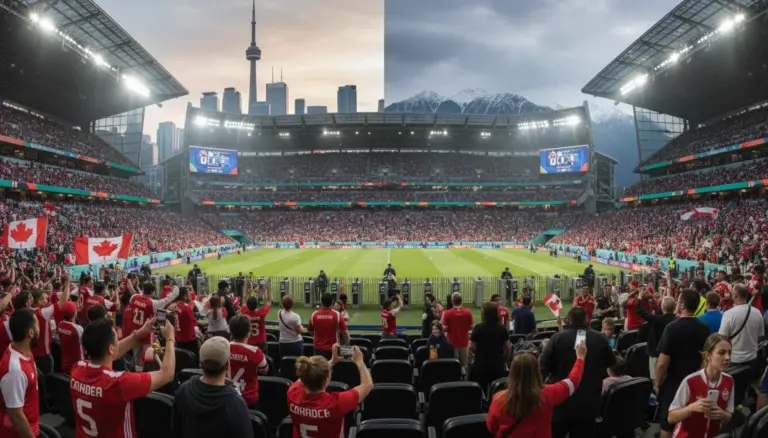
Canada is not being ranked among the title favorites, and that is fair. The gap between the host nation and the very best teams remains significant. Even so, home support changes how a team feels on the field, and that matters in a short tournament where momentum can turn quickly.
Alphonso Davies gives Canada the kind of pace and explosiveness that can alter a match in seconds. If the crowd in Toronto and Vancouver gets behind the team early, Les Rouges can turn tight matches into emotional battles that favor the hosts more than the rankings suggest.
Whether fans are watching from the stands, a sports bar, or the couch at home, the 2026 tournament promises a rare mix of scale, tension, and unpredictability. The giants are coming, the hosts are ready, and the race for the trophy is already wide open.