
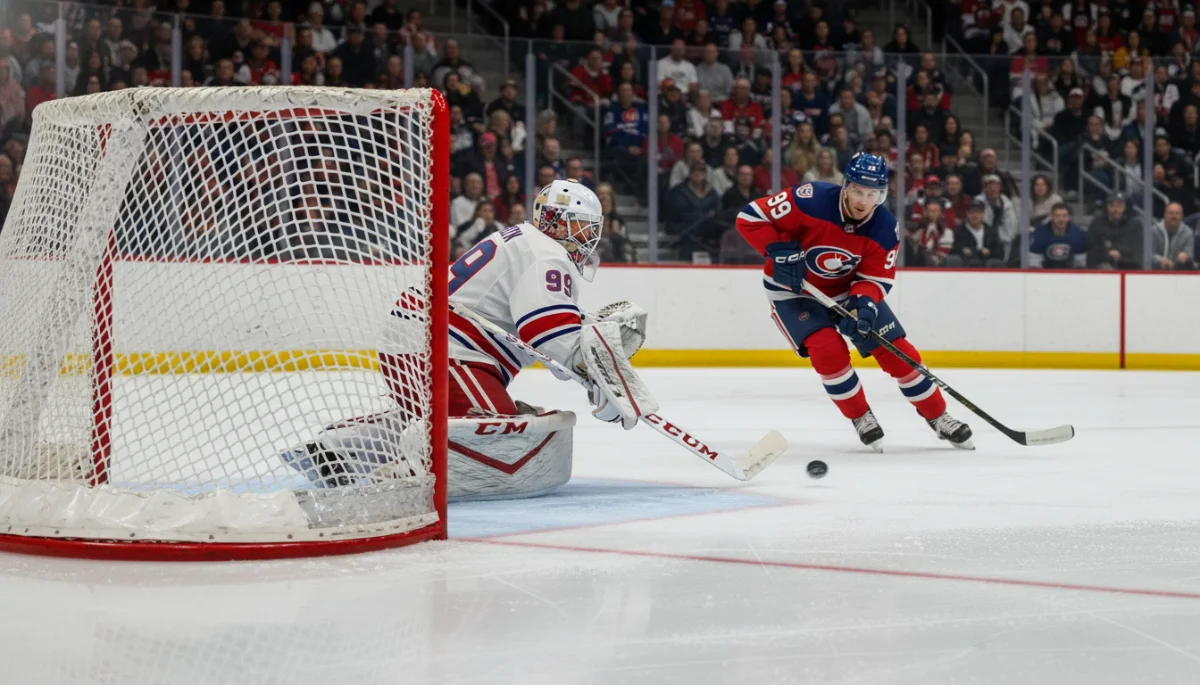
The Carolina Hurricanes entered Game 1 with the look of a team that had found its ceiling. They had rolled through the earlier rounds without a loss, looked fresh, and carried the confidence that comes with an 8-0 playoff run. Montreal, by contrast, arrived with tired legs, bruised bodies, and the kind of momentum that usually comes only from surviving elimination games. On paper, that seemed like a dangerous mix for the Canadiens. In practice, Montreal walked into Raleigh and delivered a 6-2 shocker that completely flipped the opening night script.
This was not a lucky bounce or a one-off heater. It was a statement about pace, execution, and the danger of assuming rest is the same as readiness. Carolina had nearly two weeks between series, the longest break any NHL club has had in the postseason in well over a century. Montreal had spent that same stretch battling, recovering, and squeezing every bit of urgency out of back-to-back Game 7 wins. The result was a first period that exposed both ends of that rest-versus-rhythm debate.
A First Period Carolina Will Want to Forget
For a moment, the home crowd had reason to believe the Hurricanes were going to keep their perfect run alive. Seth Jarvis opened the scoring just 33 seconds into the game, giving Carolina exactly the kind of burst that usually sets the tone at PNC Arena. But the lead barely had time to settle in before Montreal answered with force and precision.
Cole Caufield tied the game with the sort of quick strike that makes him such a constant threat. Then Phillip Danault turned a clean transition play from Alexandre Carrier into a breakaway goal that put Montreal ahead. Before Carolina could regroup, Alexandre Texier added another, and rookie Ivan Demidov capped the period with a dazzling finish that made it 4-1. Four goals in less than twelve minutes against a team that had barely conceded all spring told the story better than any speech ever could.
The goals that changed the mood
- Seth Jarvis struck first for Carolina after only 33 seconds.
- Cole Caufield quickly pulled Montreal level.
- Phillip Danault finished a transition chance to make it 2-1.
- Alexandre Texier stretched the lead to 3-1.
- Ivan Demidov’s breakaway finish pushed it to 4-1.
Why Montreal’s Plan Worked So Well
The Canadiens did not beat Carolina by accident. They identified the Hurricanes’ pressure game and found a practical way around it. Rod Brind’Amour’s club is built to compress space, attack the puck hard, and force opponents into rushed decisions along the boards. That approach usually leaves teams trapped in their own zone and gasping for air by the second period.
Montreal responded with quicker puck movement and better support through the middle of the ice. Rather than trying to fight through the first layer of pressure, the Canadiens moved the puck laterally, escaped cleanly, and turned turnovers into immediate offence. That choice did two things at once: it slowed Carolina’s forecheck and created open ice behind the Hurricanes’ aggressive defenders. Suddenly, Montreal was not surviving pressure. It was using that pressure to create scoring chances the other way.
Jake Evans summed up the feeling after the game by pointing to the team’s sharp execution from the opening shift. That sharpness was obvious everywhere. Montreal’s exits were cleaner, its passes were crisper, and its reads in transition were faster than Carolina’s response time.
Goaltending Told Two Very Different Stories
Frederik Andersen had been one of the major reasons Carolina was viewed as nearly untouchable. He came into the series with video-game numbers and had been performing at a level that made the Hurricanes look almost impossible to beat. Game 1, though, was a reminder that even elite goaltending has limits when the structure in front of it breaks apart.
Andersen allowed five goals on 21 shots. Some of those chances came from dangerous areas, but the larger issue was the way Montreal kept finding clean looks off the rush. The goalie was left exposed far too often, and he could not keep erasing mistakes forever.
At the other end, Jakub Dobes handled the kind of pressure that can unravel a lesser netminder. He gave up the first goal, then settled in and stopped 24 of 26 shots. That steadiness mattered because Carolina did not stop pushing after the opening period. Dobes gave Montreal exactly what a road team needs in a hostile building: calm, reliable saves that kept the scoreline comfortable.
What the Final Minutes Really Mean
Carolina tried to claw back into the game, and Eric Robinson managed to get one past Dobes, but Montreal never let the night become a genuine comeback story. Juraj Slafkovsky made sure of that with two goals in the third period, including an empty-netter that sealed the final score at 6-2. Nick Suzuki also played a major role, piling up three assists and steering the Canadiens’ attack with poise.
By the end of the night, the message was clear: Montreal was not simply hanging around in the conference final. It was dictating terms. The Canadiens had absorbed the early punch, answered immediately, and then kept pressing until Carolina had no room left to recover.
What Montreal must protect in Game 2
- Continue winning puck races through the neutral zone.
- Keep the puck moving before Carolina can set its forecheck.
- Protect Dobes with disciplined support in front of the net.
- Stay patient if Carolina opens Game 2 with more urgency.
Why the Series Is Far from Over
Montreal deserves every bit of praise for the way it handled Game 1, but the Canadiens know better than to treat one win as a finished job. Carolina will almost certainly come out faster, cleaner, and more desperate in the next game. A team with this much discipline and this much talent will make adjustments, and it will not accept another night like this without a fight.
Even so, the opener changed the tone of the series. It showed that the Hurricanes can be disrupted, that the Canadiens can play with pace under pressure, and that the gap between favourite and underdog may be smaller than expected. Montreal did more than steal a game. It proved it can force one of the league’s best teams into uncomfortable territory and win there.
If Game 1 was supposed to confirm Carolina’s dominance, Montreal turned it into a warning instead.