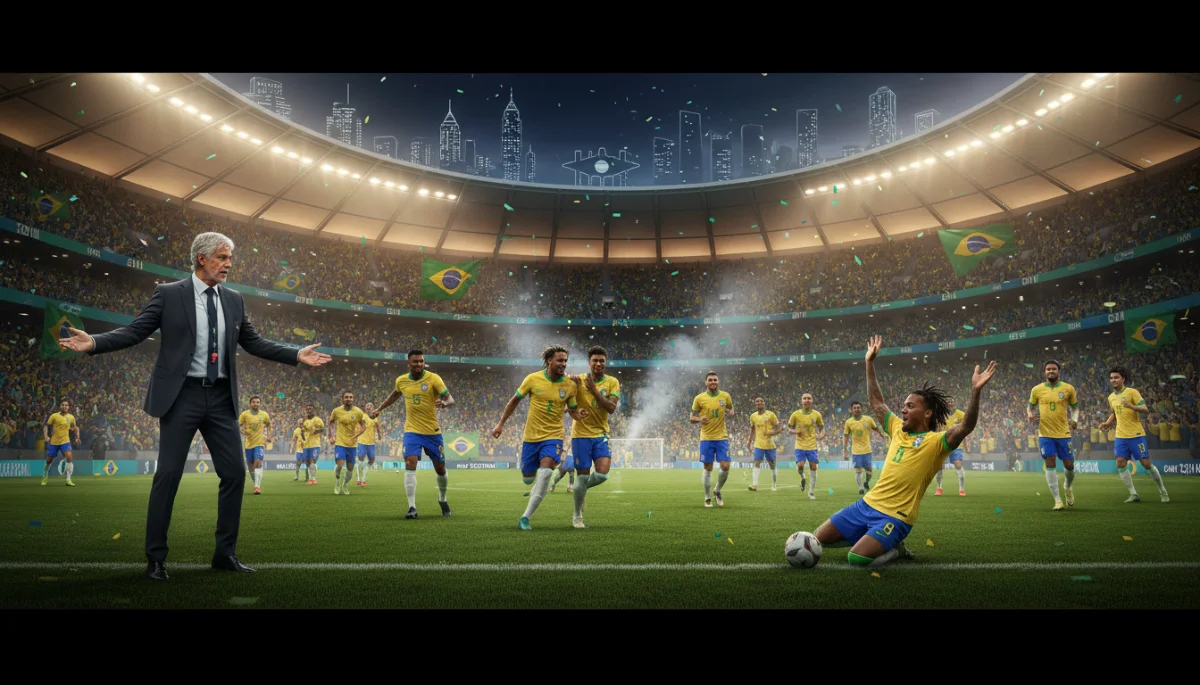
Carlo Ancelotti is set to finalize the Brazil squad for the 2026 World Cup in Rio de Janeiro, and the decision carries real weight. After sending FIFA a 55-player preliminary pool on May 12, he now has to narrow the field to 26 names capable of handling the pressure, the spotlight, and the expectation that always follows Brazil at a global tournament. For a nation still chasing its first title since 2002, this list is about more than selection. It is about identity, balance, and whether the team can finally turn elite talent into a complete championship run.
Why this squad matters so much
This is Ancelotti’s first World Cup campaign in charge of Brazil, and that alone makes the roster significant. He arrives with a decorated club résumé across Europe’s top leagues, but international management is a different kind of challenge. Brazil expects flair, yet it also needs structure, and the final list must reflect both. The Selecao have repeatedly fallen short in the knockout rounds, which means every call-up will be judged through the lens of results rather than reputation.
What makes this squad especially intriguing is the way it blends certainty with debate. Some positions are already settled, while others remain open because of injuries, form swings, and tactical preferences. That tension is exactly why the final group has become one of the most discussed roster decisions in the build-up to the tournament.
The players who appear nearly locked in
A handful of names seem extremely likely to make the final cut. In goal, Alisson is expected to remain the clear first choice, with Ederson providing high-level cover. At center back, Marquinhos and Gabriel Magalhaes look like the most stable pairing, while Bremer and Leo Pereira offer valuable depth. The midfield core is also taking shape, with Casemiro, Bruno Guimaraes, and Lucas Paqueta giving Brazil a blend of control, ball recovery, and progression.
In attack, Brazil still has the kind of forward quality that most national teams can only envy. Vinicius Junior and Raphinha bring speed and directness, while Matheus Cunha and Gabriel Martinelli add movement and unpredictability. Wesley is widely viewed as the likely option at right back because Vanderson is unavailable, and Alex Sandro remains the favorite on the left side. That base gives Ancelotti enough stability to build a system that can survive the knockout rounds.
| Area | Likely Names | Selection Outlook |
|---|---|---|
| Goalkeeper | Alisson, Ederson | Very strong certainty |
| Defense | Marquinhos, Gabriel Magalhaes, Bremer, Leo Pereira | High confidence, with depth still under review |
| Midfield | Casemiro, Bruno Guimaraes, Lucas Paqueta | Core of the team |
| Attack | Vinicius Junior, Raphinha, Matheus Cunha, Gabriel Martinelli | Expected to anchor the frontline |
The injuries that changed the conversation
Brazil’s final roster has been complicated by several major injuries. Rodrygo is out after knee ligament surgery, and the recovery timeline is expected to keep him sidelined for roughly six months. Estevao Willian also misses out because of a serious muscle injury suffered against Manchester United in April. On defense, Eder Militao remains unavailable due to a longer-term knee issue. Those absences remove important depth from both ends of the pitch and force Ancelotti to rethink several rotation spots.
The ripple effect is particularly important in the attack. Rodrygo’s absence creates more room for others, while Estevao’s injury reduces the number of creative options available from the bench. In a tournament where one substitute can change a game, those losses matter far beyond the headlines.
Neymar’s possible return
The most emotionally loaded question in this squad is Neymar. He was included in the preliminary 55-man pool despite not playing for Brazil since October 2023, when he suffered ACL and meniscus injuries against Uruguay. Even now, at 34, he remains Brazil’s all-time leading scorer with 79 goals in 128 appearances. Recent reporting suggests Ancelotti is leaning toward taking him, especially with so many injuries reshaping the pool and with Neymar showing improved form at Santos.
For Neymar, this would be a chance to turn one more World Cup into a defining chapter. For the team, it could mean adding a proven creator who still understands how to manipulate pressure on the biggest stage. If he makes it, the player most likely to be squeezed out is Joao Pedro, despite his strong scoring season in the Premier League.
How Brazil enters Group C
Brazil’s group-stage path looks manageable on paper, though no World Cup route is ever simple. In Group C, the Selecao will face Morocco, Haiti, and Scotland. The opener against Morocco is set for June 13 at MetLife Stadium in East Rutherford, New Jersey. The second match falls in the June 19/20 window against Haiti at Lincoln Financial Field in Philadelphia. Brazil then closes the group stage against Scotland in the June 25/26 window at Hard Rock Stadium in Miami Gardens.
- The opener against Morocco will likely set the tone for the entire group.
- The Haiti match offers a chance to secure momentum and manage squad energy.
- The Scotland fixture could determine whether Brazil finishes first or settles for second.
Morocco is the only opponent in the group that sits inside the top tier of FIFA’s ranking conversation, which makes Group C one of Brazil’s more favorable draws in recent memory. A first-place finish would likely produce a Round of 32 meeting with one of the third-placed teams from another group, giving Brazil a potentially smoother route into the knockout phase.
What the opening lineup could look like
Ancelotti’s March friendlies against France and Croatia offered a useful clue about his preferred shape. Brazil could line up in a 4-2-3-1 or a 4-3-3 depending on the opponent and the game state. A likely version starts with Alisson in goal; Wesley, Marquinhos, Gabriel, and Alex Sandro across the back; Casemiro and Bruno Guimaraes in central midfield; then Raphinha, Lucas Paqueta, and Vinicius Junior supporting a central striker such as Matheus Cunha or Igor Thiago.
If Neymar is included, he could slot into the No. 10 role or even function as a false nine in a more fluid setup. That versatility is part of why his availability continues to dominate the discussion. Brazil does not just need stars. It needs the right combination of experience, tactical balance, and form. If Ancelotti gets that mix right, this squad has the talent to challenge for a sixth world title.